


Colours, textures, shapes, flavours…
GREEN – YOUNG – CRUNCHY

What we focus on in June
Gentle preparation of young spring vegetables
June is one of the most beautiful months in the kitchen. Allotments and fields now offer the best of their first harvest — asparagus, young peas, radishes, kohlrabi, salad mixes, young garlic and the first summer herbs. They have a short seasonal rhythm, high water content, delicate texture and a flavour you don't need to "improve".
Just one rule: don't ruin them with long cooking.
In June, Smart Choice therefore focuses on gentle preparation of young spring vegetables — how to cook them so they retain their colour, juiciness, crunch and all the nutrients we eat them for.

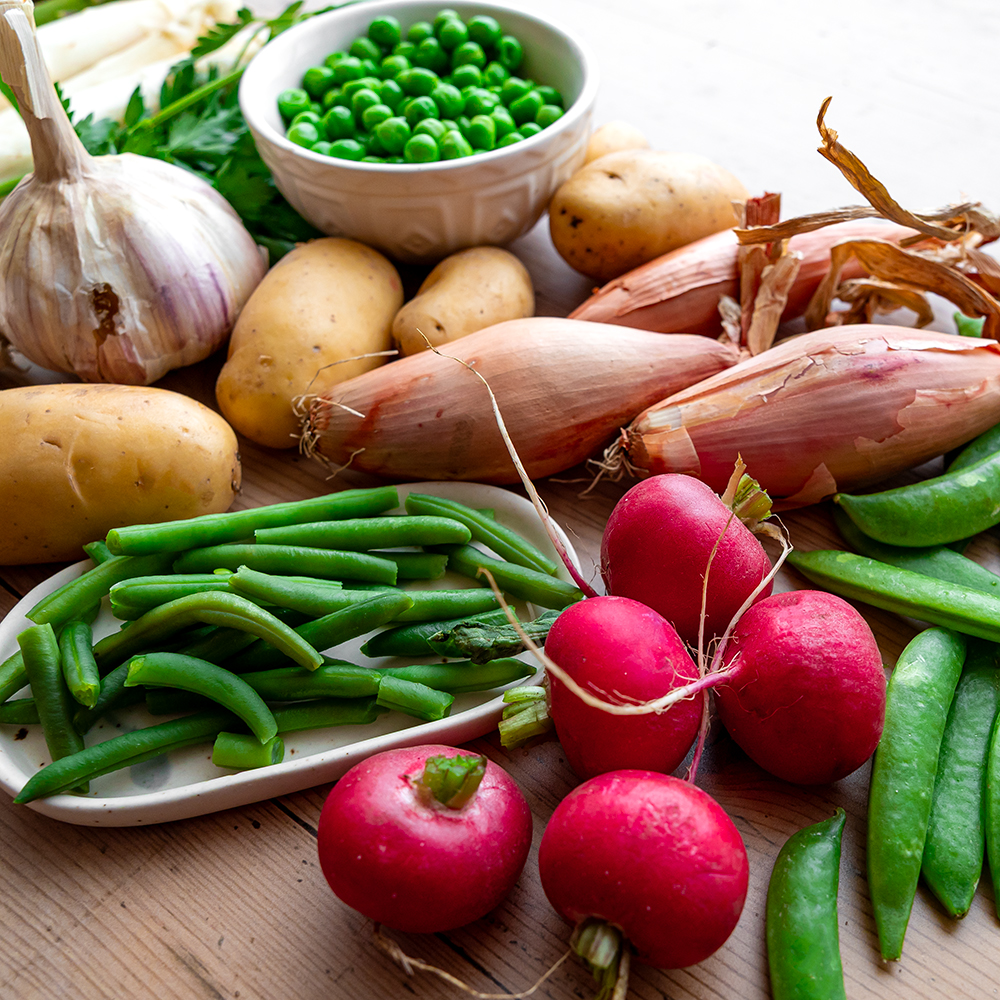
Why young vegetables are so valuable
Young shoots and the first harvest contain a higher proportion of water, more delicate fibre and often a higher concentration of water-soluble vitamins — especially vitamin C and folate (B9) — than older produce. Many of these substances are heat-sensitive. Cook them too long and half of them are gone: they drain away with the water or break down in the heat. The solution is fortunately simple — less heat, less time, less water.
Gentle preparation in five rules
- Short time, high heat. Blanching (1–3 minutes in salted boiling water) preserves colour and crunch. Immediately followed by an ice bath to stop the cooking process.
- Steam before water. Steaming is one of the gentlest methods — nutrients stay in the vegetables, not in the pot.
- Wok instead of pot. Brief stir-frying at higher heat with a little oil preserves structure and releases aroma.
- A little fat isn't luxury, it's a tool. Carotenoids (β-carotene, lutein) are fat-soluble — a few drops of good olive oil significantly increases their absorption.
- Sometimes raw is best. Radishes, young kohlrabi, peas from the pod, leafy salads, herbs — when they are really fresh, heat only gets in the way.
What to expect on the plate
Rich green colour instead of olive grey. Crunch that holds on the tooth. Full, clean flavour without the need to over-salt or thicken. And more vitamin C, folate, chlorophyll, sulforaphane and polyphenols — substances that the body uses exactly as it should.
And when we combine all this with seasonal and local shopping, we get something extra:
- More diverse fields and support for biodiversity. When we choose local produce, we respect the natural rhythm of nature and support sustainable agriculture.
- A richer and more varied selection in shops. Demand for quality changes what ends up on the shelves at all.
- A shorter journey from field to plate. Fresher ingredients = more flavour and nutrients.
That sounds like a smart choice, doesn't it? 🙂
In our restaurants we cook exactly like this for you in June. Choose green, young, crunchy.
What's cooking?
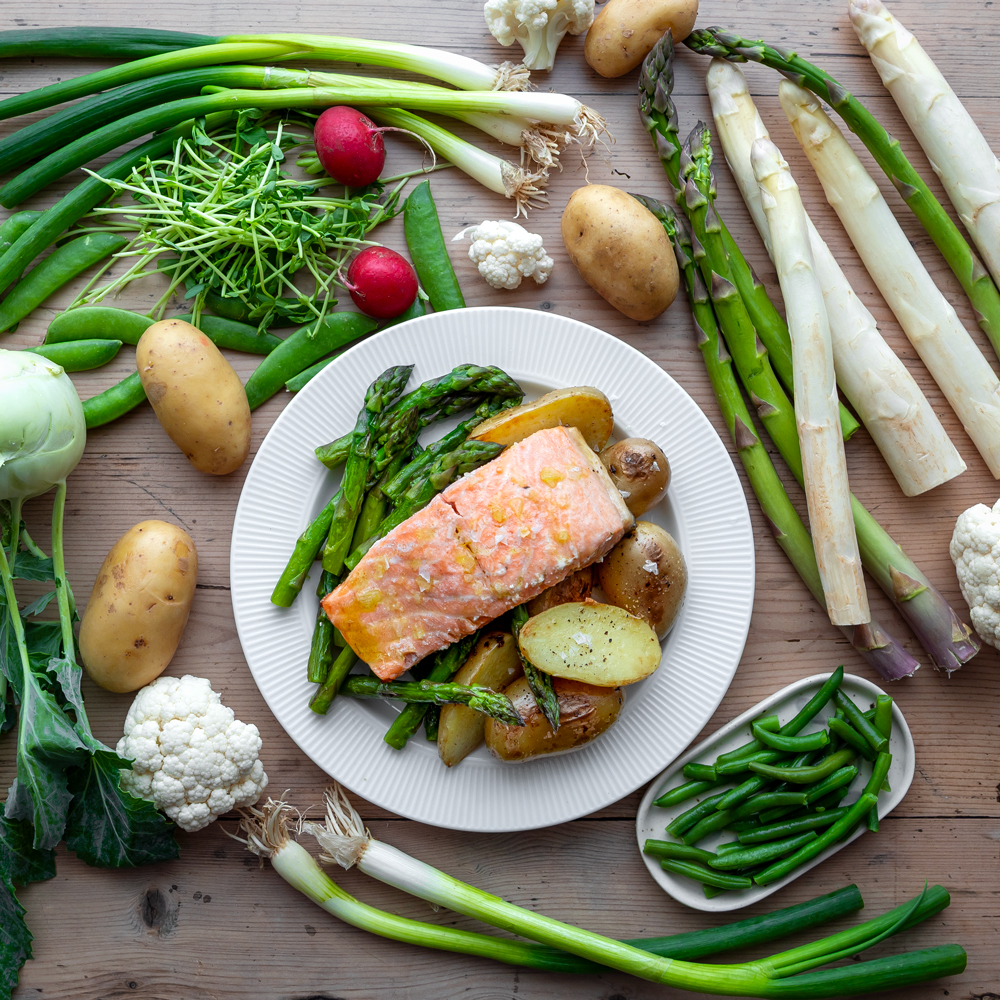
Pan-fried salmon in olive oil with grilled asparagus and grenaille potatoes
4 porce · ~30 minut
A classic combination with minimum unnecessary cooking. The asparagus is briefly seared in the pan, the salmon is gently finished in the oven — the skin stays crispy, the inside juicy. The potatoes are kept in their skin, where all the potassium and fibre are.
Ingredients:
- 4 salmon fillets with skin (approx. 150 g each)
- 800 g grenaille potatoes
- 400 g green asparagus
- 4 cloves of garlic
- 4 tablespoons extra virgin olive oil
- salt, lemon juice, fresh thyme
Preparation:
- Pre-cook the potatoes in their skin until tender. Cut larger pieces in half.
- Cut the woody ends off the asparagus. Briefly sear the spears in olive oil until golden. Season with salt.
- Rub the salmon fillets with oil, season with salt and drizzle with lemon juice.
- In a hot oven-proof pan, cook the salmon skin-side down for about 2 minutes. Then finish in an oven preheated to 180 °C for about 6–8 minutes.
- In a separate pan, fry the pre-cooked potatoes with garlic until golden. Add the asparagus and briefly heat through.
- Serve together, sprinkled with fresh thyme.
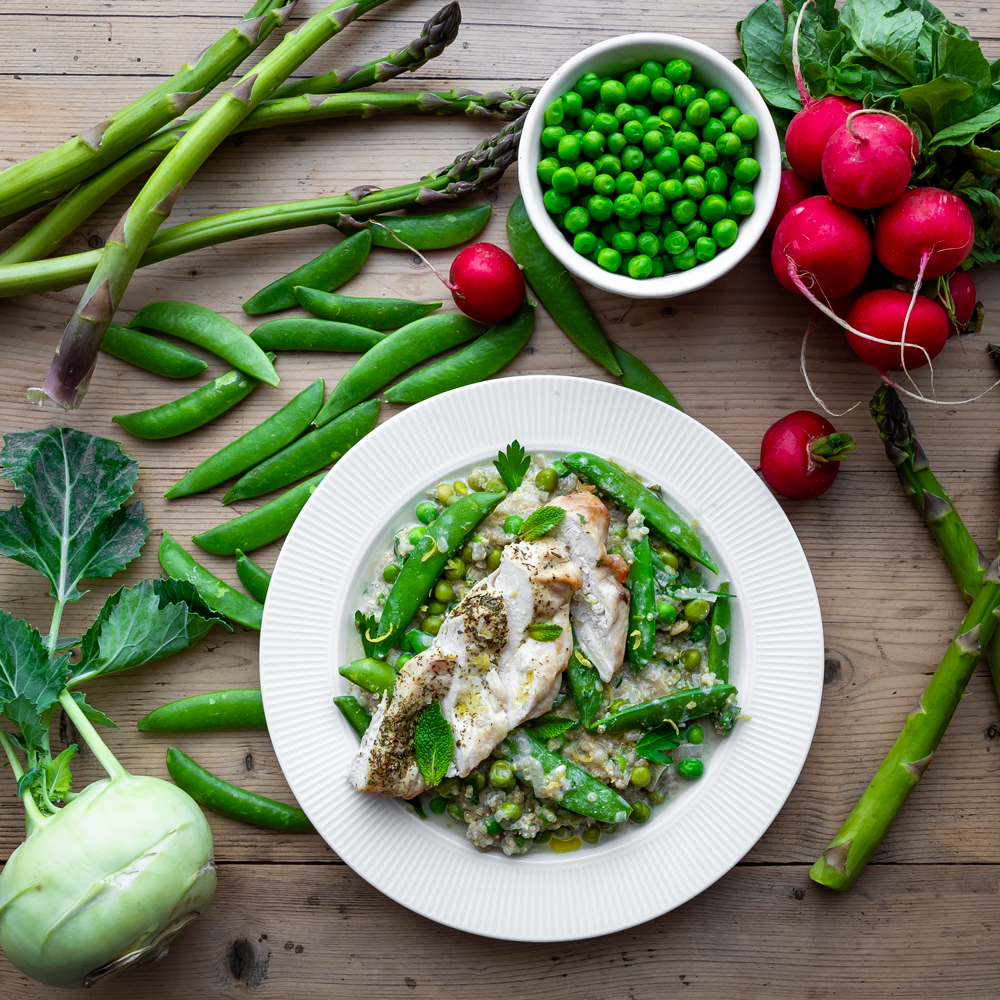
Quinoa "risotto" with young peas, ricotta and chicken breast
4 porce · ~30 minut
Quinoa replaces rice and adds complete plant-based protein. The peas are stirred in just before serving — just warmed through so they stay a rich green and freshly sweet.
Ingredients:
- 100 g white quinoa
- 600 ml vegetable stock
- 320 g frozen peas
- 320 g sugar snap peas
- 160 g ricotta
- 4 chicken breast fillets (approx. 150 g)
- 2 shallots, 2 cloves of garlic
- 1 lemon (zest and juice)
- 3 tablespoons olive oil
- fresh parsley, mint, thyme
- salt, freshly ground pepper
Preparation:
- Finely chop the shallots and slice the garlic thinly. Briefly sauté in olive oil in a larger pan and add the rinsed quinoa.
- Pour over the stock, add the grated lemon zest. Cook over low heat until the quinoa is tender (approx. 15 minutes).
- Roughly chop the sugar snap peas. Together with the frozen peas, add to the quinoa for the last 2–3 minutes — you want to just warm through, not overcook.
- Season the chicken with salt, pepper, lemon juice and thyme. Pan-fry until golden on both sides.
- Stir the ricotta, chopped parsley and mint into the finished risotto. Season with lemon juice, salt and pepper.
- Serve with the pan-fried chicken.
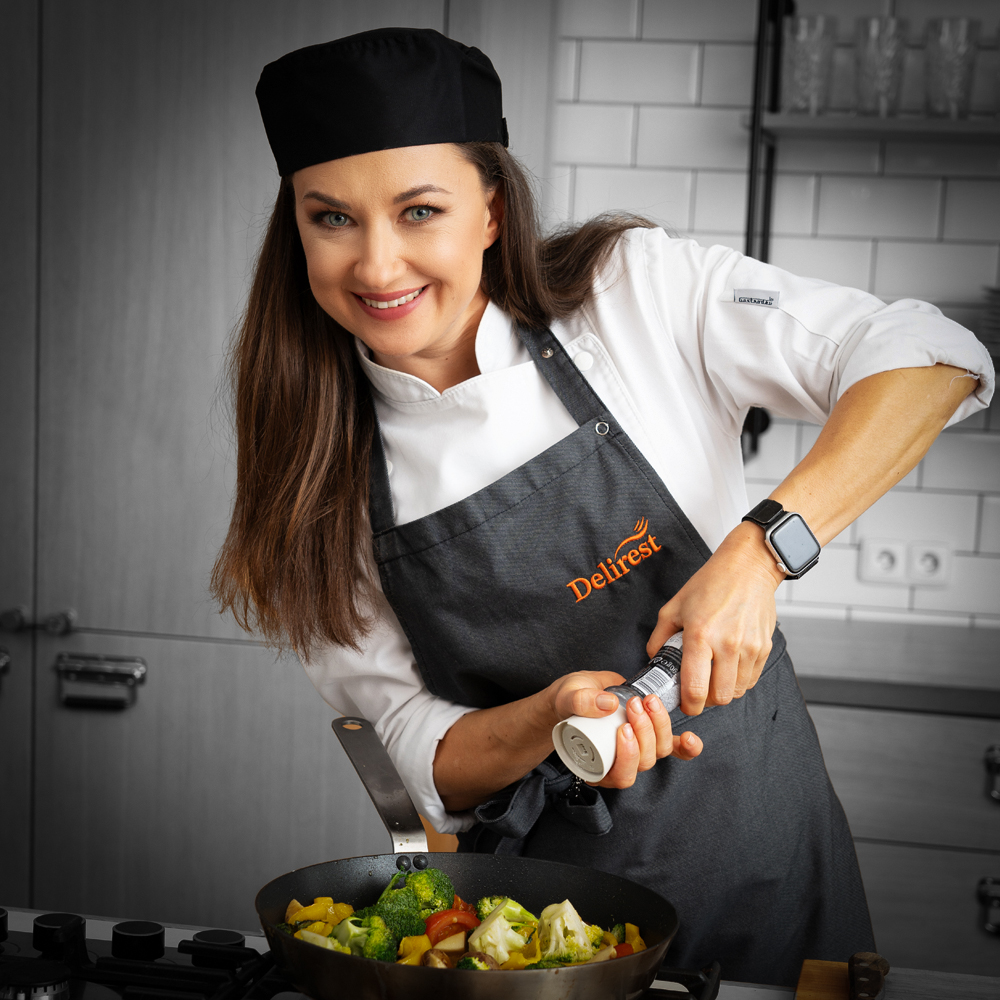
Recommended by Kristýna Ostratická, head chef at Delirest:
For more than 15 years she has been professionally dedicated to gastronomy and nutrition. She studied both fields and combines them perfectly. She has a wealth of beautiful experiences and demanding challenges behind her.
From food editor to personal coaching, appearing in a television cooking show with her own recipes, to introducing healthy dishes into corporate canteens along with preparing them for hundreds of diners.